


A product decision rarely stays within one category. A faucet selection can influence countertop details, cabinetry affects appliance planning, and a door system can shape decisions long before installation begins.
For architects, designers, and builders, selecting the right product involves more than finding something that fits the aesthetic direction of a project. It requires understanding how materials, dimensions, performance, installation requirements, and everyday use influence the final result.
At GROF USA, we support this process with curated collections from internationally recognized manufacturers and the product knowledge needed to evaluate how different solutions respond to the requirements of each residential project.
Product performance is often determined by details that are easy to overlook during the early stages of specification.
A faucet, for example, needs to be evaluated alongside sink configuration, mounting requirements, plumbing conditions, and everyday use. Surface selections involve more than color and texture; format, finish, surrounding materials, and lighting can all influence how the material performs and appears once installed. Door systems introduce another set of considerations, including dimensions, hardware, security, installation conditions, and the architectural language of the residence.
Evaluating these relationships during specification can help identify challenges before products reach the installation stage.
Architectural elements are a good example of where design and technical requirements meet. Entry and interior door systems need to be considered in relation to dimensions, materials, hardware, installation conditions, security, and the surrounding architecture. Collections from brands such as Oikos and Barausse give professionals options for addressing these requirements without evaluating the door solely based on appearance.
Residential projects are built through connected decisions. A change in one category often creates adjustments somewhere else, which is why product knowledge becomes so important throughout the process.
Kitchen design is a clear example of how one selection can influence multiple areas of a project. Cabinetry decisions can affect appliance placement, lighting coordination, storage planning, and surface selections.
Cabinetry systems from manufacturers such as STOSA Cucine and ARAN Cucine give designers flexibility across layouts, finishes, storage solutions, and configurations. The important part during specification is understanding how those decisions connect with appliances, clearances, electrical and lighting plans, countertops, and the way the kitchen will actually be used.
Resolving these relationships early gives the design team a clearer framework for the selections that follow.
Surface specification involves both visual and practical decisions. Format, texture, finish, grout conditions, maintenance expectations, and the way a material responds to natural and artificial light can all affect where and how it should be used.
These choices also influence the surrounding palette. A surface may change how cabinetry, fixtures, hardware, or lighting are perceived once the materials are viewed together. Collections from VIVES Cerámica allow professionals to explore these relationships across different formats, finishes, and applications.
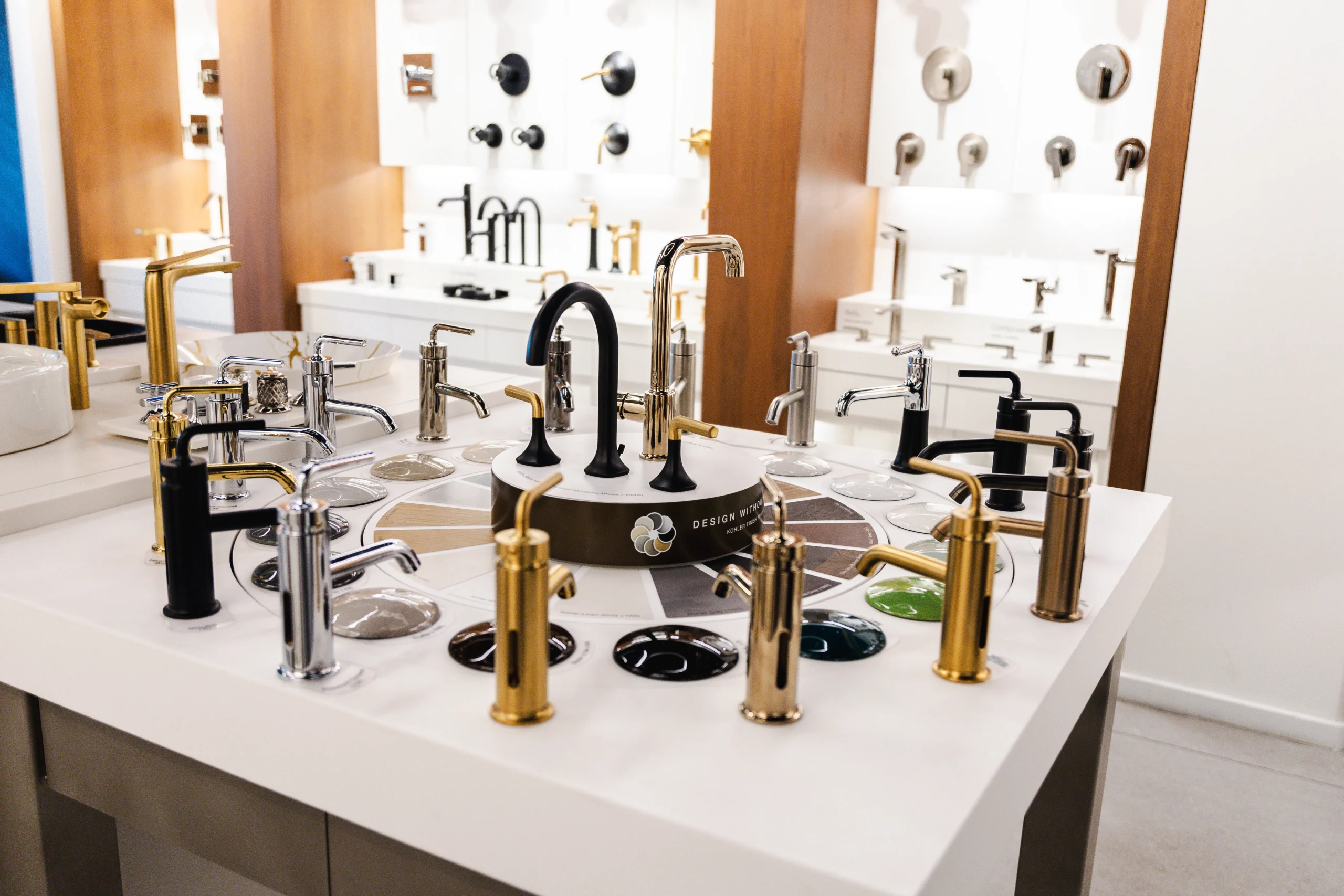
Bathroom specification often requires coordination across several trades and product categories. Faucet configuration, valve requirements, sink type, countertop openings, shower components, drainage, and installation conditions may need to be resolved before finishes are installed.
Brands such as KOHLER, Kallista, and GESSI offer a wide range of fixtures, finishes, and system options, giving professionals flexibility to specify around both the design direction and the technical requirements of the bathroom.
Addressing these factors early can reduce the need for last-minute adjustments during installation.
Digital images are useful during research, but they do not always communicate scale, texture, sheen, undertones, or how multiple finishes interact under the same lighting conditions.
Seeing materials side by side allows designers and clients to compare those relationships directly and make adjustments before selections are finalized.
At GROF USA, our showrooms are designed to make that comparison easier. In Sterling, Bethesda, and Columbia, architects, designers, builders, and homeowners can explore products across kitchens, baths, surfaces, and architectural categories while discussing the design and technical considerations behind each selection with our team.
Product expertise matters most before a selection becomes difficult or expensive to change.
When cabinetry, fixtures, surfaces, doors, and other architectural products are evaluated as parts of the same project, design teams can make more informed decisions about compatibility, installation, performance, and material relationships.
GROF USA works with architects, designers, builders, and homeowners throughout that process, combining access to leading manufacturers with hands-on product guidance across kitchens, baths, surfaces, and architectural products.
Planning a project? Visit one of our showrooms or connect with the GROF team to review products, compare finishes, and discuss the specifications behind your selections.