


A product can look right on installation day and still prove to be the wrong choice years later.
In kitchens, bathrooms, and other high-use spaces, longevity depends on more than appearance. Material composition, finish quality, maintenance requirements, construction, compatibility with surrounding elements, and frequency of use all influence how a product performs over time.
For architects, designers, and builders, understanding these factors during the specification process helps distinguish a product that simply fits the initial concept from one that continues to function successfully within the finished space.
At GROF USA, product selection goes beyond appearance. We help professionals and clients evaluate how each solution responds to the design vision, technical requirements, and everyday demands of a project.
The materials behind a product play a major role in how it performs over time. A surface, fixture, or architectural element needs to do more than complement the design; it needs to respond well to the conditions it will experience every day.
In kitchens and bathrooms, for example, products are constantly exposed to movement, moisture, cleaning, and repeated use. The right material can make a significant difference in how a product responds to these conditions and how it performs within the space over time.
Two products may look similar at first glance while requiring very different care or responding differently to the same environment. Material composition, recommended cleaning methods, resistance to moisture or staining, and intended application should all be considered before specification.
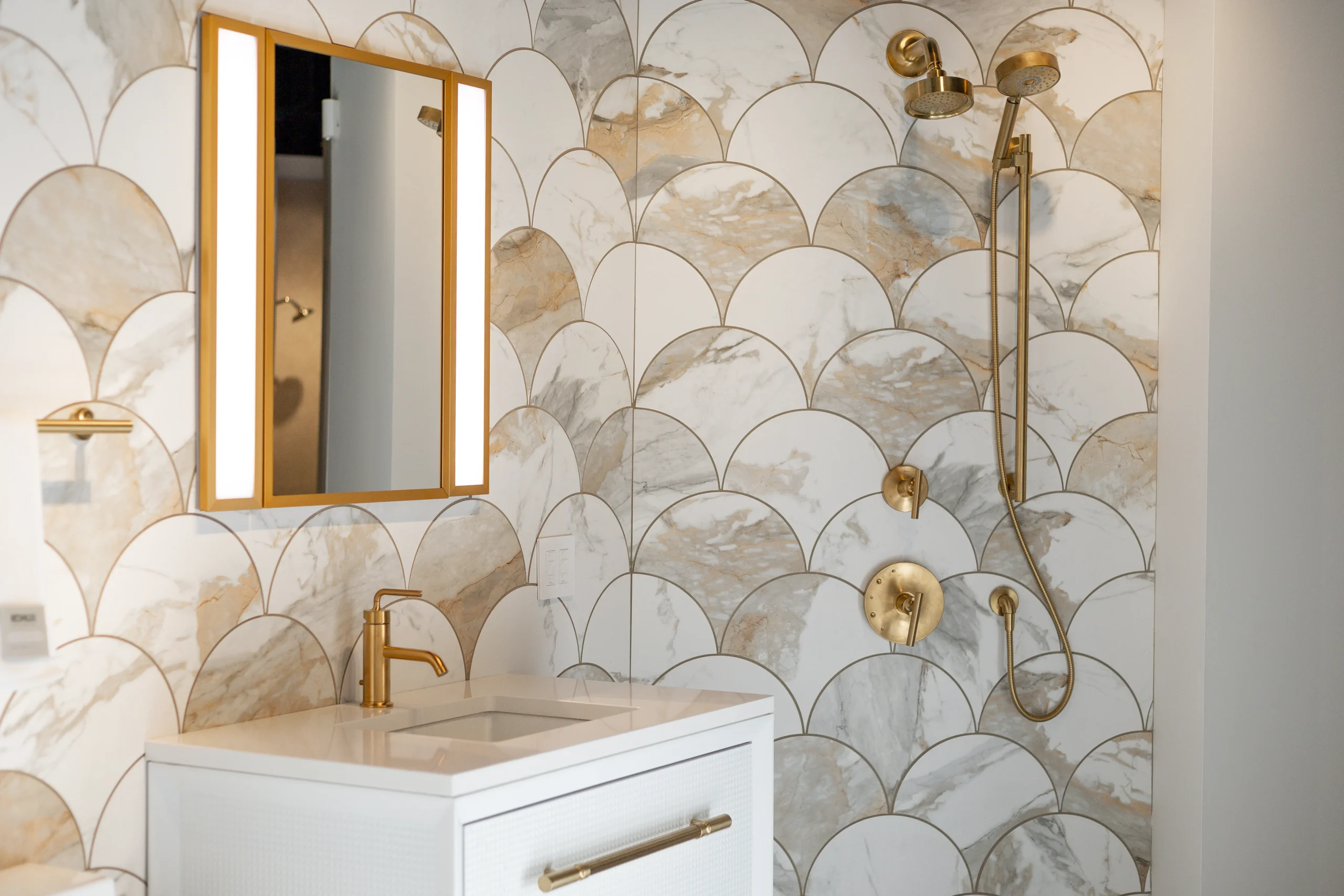
Finishes influence more than the initial appearance of a room. They help establish visual connections between fixtures, hardware, cabinetry, surfaces, and architectural details, but they also need to be evaluated based on the environment where they will be used.
A finish selected for a frequently handled faucet or cabinet pull may face very different conditions than one applied to a decorative element. Cleaning requirements, exposure to moisture, fingerprints, and the natural aging process of certain materials can all influence how that finish changes over time.
Brands such as KOHLER, GESSI, Kallista, and Robern offer a wide range of finish options, allowing designers to consider both visual coordination and the practical requirements of each application.
Some of the qualities that influence long-term use are difficult to evaluate from a product image alone. Internal components, hardware, construction methods, movement, and engineering all contribute to how a product behaves in everyday use.
With a faucet, that experience may come down to details such as handle movement, valve operation, and how the fixture performs through repeated interaction. In cabinetry, drawer hardware, hinges, storage mechanisms, and interior organization all become part of the way a space functions daily. With a door system, hardware and movement are just as important as the visible material or finish.
These are often the details users notice over time: how smoothly something opens, how stable it feels, how easily it can be maintained, and whether repeated use changes the overall experience.
Maintenance is part of product specification, not an afterthought.
Recommended cleaning products, surface sensitivity, access to components, replacement parts, and frequency of use can all affect how practical a selection becomes after installation. These considerations help determine whether a product is truly suited for the way a space will be used.
The requirements may also change by project type. A residential kitchen may be used heavily by the same household every day, while hospitality environments can introduce higher turnover, more frequent cleaning, and different maintenance expectations.
For the end user, these decisions affect how easy a product is to live with after the project is complete. The best specification is not necessarily the product that requires the least maintenance, but one whose care, performance, and expected use are appropriate for the project.
Designing for longevity does not mean every selection needs to be neutral or restrained.
Color, distinctive finishes, unique materials, and statement pieces can all have a place in a long-term design. The more important question is whether each choice has a clear role within the project and whether its material, construction, and maintenance requirements make sense for the environment where it will be used.
A product can have a strong design identity and still be a practical long-term selection. Longevity comes from choosing intentionally, not from trying to predict which aesthetic will never go out of style.
The questions that matter most often become clear after the project is finished: Does the product still work well for the way the space is used? Is it practical to maintain? Do the materials and finishes continue to work together? Does it perform as the specification intended?
Asking those questions before purchase is where product expertise becomes valuable.
At GROF USA, we help architects, designers, builders, and clients evaluate products beyond their first impression, considering materials, finishes, functionality, maintenance, and the technical requirements of each project.
Visit a GROF showroom or connect with our team to compare products in person and discuss the specifications behind your project.