


This is what can be defined as “almost right.” It is the condition in which materials, layouts, and systems perform individually but lack alignment when brought together.
In high-end environments, that lack of cohesion does not go unnoticed. It directly affects how a space is perceived, how it functions over time, and how its value is ultimately understood.
“Almost right” is not the result of poor quality or lack of investment. In many cases, it appears in well-funded projects with strong design intent and experienced teams involved.
It often shows up in subtle but critical ways:
Individually, these decisions may be justified. They meet specifications, pass reviews, and align with isolated objectives. However, when experienced together, they introduce a sense of disconnection.
Luxury spaces are not defined by the quality of individual elements, but by how precisely those elements work together.
At a luxury level, expectations go beyond functionality and material quality. They demand precision, consistency, and clarity in execution.
In this context, small inconsistencies are amplified. What might be acceptable in other segments becomes immediately perceptible in high-end environments. The result is rarely dramatic, but it is felt. The space may look complete, but it does not feel fully resolved.
This has a direct impact on:
For homeowners, this often translates into a space that never feels entirely satisfying, even when everything appears to be in place. For architects and designers, it can influence how the project is evaluated as a whole, both internally and by clients.
Luxury is not achieved by adding more elements. It is achieved by ensuring that every element is aligned with intention.
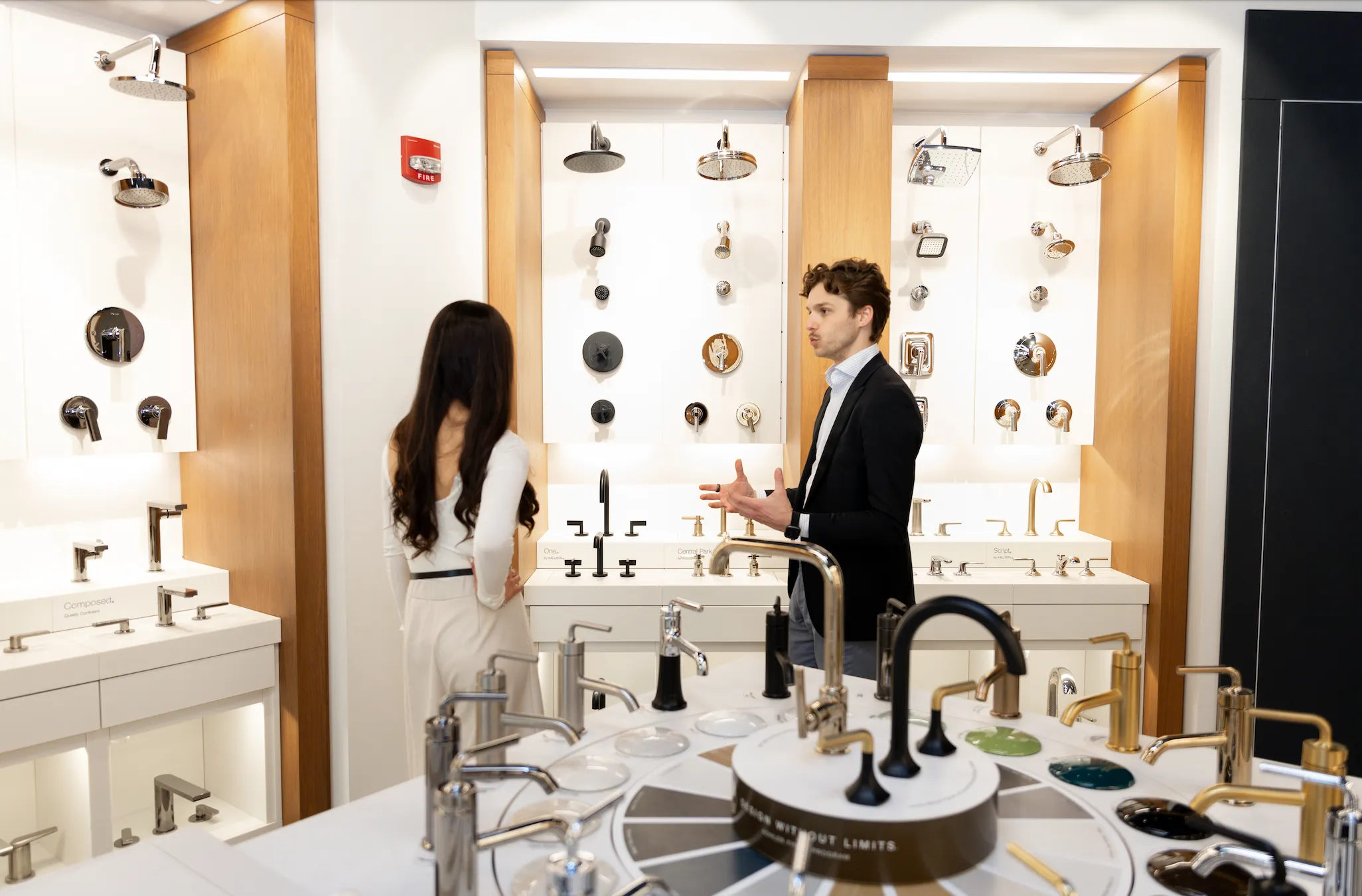
In practice, “almost right” is rarely accidental. It is typically the result of fragmentation within the decision-making process.
Some of the most common causes include:
Even in well-managed projects, these factors can introduce small inconsistencies that accumulate over time. The result is not failure, but dilution of the original design intent.
Avoiding “almost right” requires more than strong design concepts or access to premium products. It requires continuity and discipline throughout the entire project lifecycle.
Key principles include:
This level of integration is what distinguishes projects that are technically correct from those that feel complete.
Avoiding “almost right” is not a matter of taste. It is a matter of coordination, technical clarity, and disciplined execution.
At GROF, we work alongside architects, designers, and developers to ensure that every decision, from early concept through final specification, is aligned and intentional. Our role is not limited to sourcing products. It is to support the integrity of the design as a whole.
Our approach integrates:
By aligning design intent with specification and delivery, we help reduce fragmentation and maintain clarity throughout every stage of the process.
The result is not simply a well-designed space, but one that feels resolved, cohesive, and complete.